


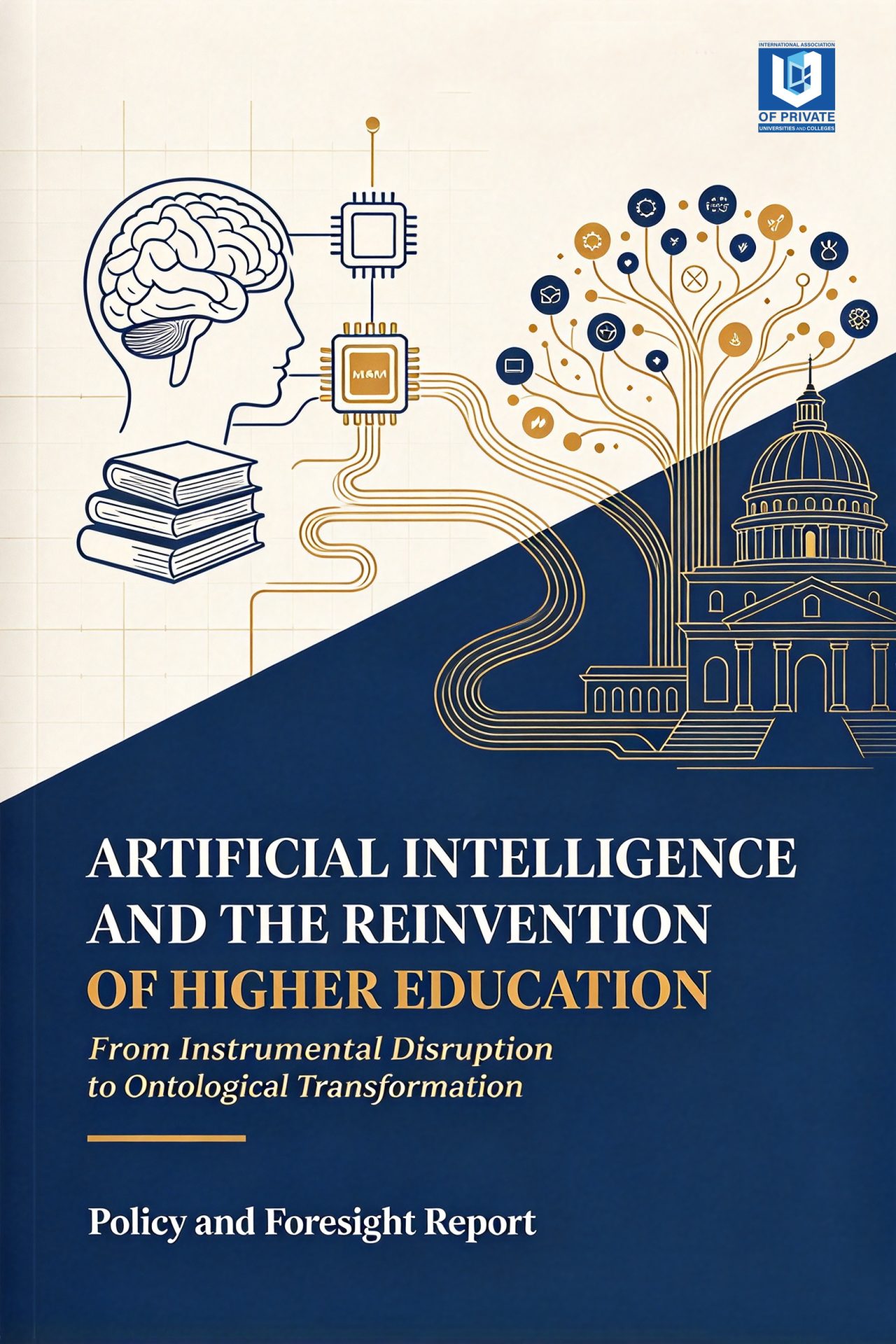
Artificial Intelligence and the Reinvention of Higher Education
From Instrumental Disruption to Ontological Transformation
The conversation about artificial intelligence in higher education has, until recently, been dominated by an instrumental imaginary: AI as a smarter search engine, a tireless teaching assistant, an automated grader, a productivity multiplier. This framing, while not wrong, is profoundly insufficient. What is unfolding before us is not merely the introduction of a new tool into an existing system but a tectonic shift in the conditions under which knowledge is produced, transmitted, and validated — a shift so fundamental that it calls into question the anthropological assumptions upon which the modern university has rested for nearly a millennium.
IThe Hour of Decision: Why This Time Is Different
When the University of Bologna was founded in 1088, and when the medieval university crystallized its tripartite mission of teaching, research, and service, the world operated under a set of constraints that have only now begun to dissolve: knowledge was scarce, its transmission required physical proximity to masters and manuscripts, and the production of new knowledge depended on the cognitive limits of individual human minds. Each of these pillars — scarcity, proximity, cognitive finitude — is being simultaneously eroded by generative AI. The result is not a reform of the university but a confrontation with its possible obsolescence as an institutional form, and simultaneously, an unprecedented opportunity to reinvent it.
This essay argues that the transformation of higher education by AI must be understood at four nested levels: the epistemic (what counts as knowledge), the pedagogical (how learning occurs), the institutional (what form the university takes), and the anthropological (what it means to be an educated human being). To stop at any one level — as most current policy discussions do — is to mistake a symptom for the disease, or rather, a ripple for the earthquake.
Existing discourse, including thoughtful contributions from leading scholars and policymakers, has tended to concentrate on the first two levels: how AI changes what students know and how teachers teach. These are vital questions, but they presuppose that the institution of the university and the conception of the human learner remain stable. They do not. The deeper transformation is ontological: AI is changing not merely how we educate but what education is for, and what kind of being the educated person is becoming.
IIThe Epistemic Turn: Knowledge Beyond Possession
For centuries, higher education has been organized around a possessive model of knowledge: the student accumulates facts, theories, and methods, storing them in memory like a library stores books. The examination system, the lecture format, the degree credential — all are technologies of certification that verify how much knowledge a person has successfully internalized. Generative AI detonates this model from within. When any articulate person with an internet connection can summon, in seconds, a synthesis of any field’s accumulated knowledge, the possession of knowledge ceases to be a scarce resource and therefore ceases to be the basis of educational distinction.
What emerges in its place is what we might call an orchestrational epistemology: the educated person is no longer defined by what they know but by what they can do with what is collectively known. The currency of the realm shifts from retention to judgment, from recall to interrogation, from accumulation to integration. This is not merely a change in degree but in kind. It requires us to ask: what cognitive capacities remain uniquely valuable when the entirety of recorded human knowledge is available on demand?
Figure IThe frontier of human knowledge: established certainties give way to luminous, uncharted territories — the landscape toward which the orchestrational intellect must navigate.
The answer, I propose, has three dimensions. First, epistemic taste — the ability to distinguish the profound from the banal, the rigorous from the specious, the fertile from the sterile. AI can generate a thousand hypotheses; it cannot, on its own, tell us which ones are worth a decade of a human life. Second, integrative imagination — the capacity to forge connections across domains that no algorithm has been trained to associate, to see in a poem a mathematical structure and in a theorem a metaphysical implication. Third, normative orientation — the capacity to ask not only “what can be known?” but “what is worth knowing?” and “to what end?” These three capacities — taste, imagination, purpose — constitute the new trivium of the AI university.
But this epistemic turn carries a peril that has been rightly intuited but not fully theorized: the risk of what I call epistemic outsourcing. When students learn to trust AI’s syntheses more than their own reasoning, they do not merely become dependent; they lose the very cognitive muscles that epistemic taste requires. The solution is not to prohibit AI but to redesign pedagogy so that AI is used as a sparring partner rather than a surrogate. The student who uses AI to generate five interpretations of a poem and then must defend, in a seminar, why one is superior to the others, is developing epistemic taste. The student who submits AI-generated prose as their own is not.
The educated person is no longer defined by what they know but by what they can do with what is collectively known.
IIIPedagogy Reconstituted: From Instruction to Cognitive Orchestration
Discussions of “intelligent teaching assistants” and “differentiated instruction” capture an important truth but remain trapped in a framework that preserves the teacher as the central node of a transmission model. The deeper transformation is the dissolution of the transmission model itself.
In the traditional model, the teacher is a bottleneck: one mind, one voice, one pace, serving dozens or hundreds of learners whose cognitive profiles, prior knowledge, and motivations differ enormously. AI dissolves this bottleneck not by replacing the teacher but by distributing cognitive scaffolding across an ecosystem of human and artificial agents. The teacher’s role shifts from being the primary source of content to being the architect of learning environments — the conductor of an orchestra in which AI tutors, peer learning communities, simulation environments, and human mentors each play their part.
This is what I call cognitive orchestration, and it has several implications. First, the locus of learning moves from the classroom to the learning journey. The classroom becomes one node in a continuous, adaptive learning ecosystem that extends across time and space. Second, assessment becomes formative and continuous rather than summative and episodic. AI can track learning in real time, identifying misconceptions as they form and adjusting the learning path accordingly — but only if human teachers retain authority over the normative dimensions of assessment: what counts as understanding, what constitutes growth, what level of struggle is pedagogically productive. Third, the teacher-student relationship deepens rather than diminishes. Freed from the burden of content delivery and routine assessment, teachers can devote their attention to what humans do best: mentoring, questioning, challenging, inspiring.
The danger is that “human indoctrination” becomes “machine indoctrination” — that the algorithm, in its pursuit of efficiency, narrows the learner’s intellectual horizons rather than expanding them. The antidote is to design AI systems that are deliberately subversive — that present counterarguments, introduce dissonance, and celebrate the productive friction of ideas in collision. An AI tutor that always agrees with the student is not a tutor but a sycophant.
IVThe Fourth Paradigm and the Emergence of Machine Co-Discovery
The proposal that AI-driven research may constitute a “fourth research method” alongside theory, experiment, and computation is an important insight, but it understates the case. AI is not merely a new method; it is a new epistemic agent in the research process, capable of generating hypotheses, identifying patterns, and even designing experiments in ways that are not simply extensions of human reasoning but represent a genuinely different mode of inquiry.
Consider the prediction of protein structures by deep learning systems. This was not merely a computational acceleration of existing biological research; it was a leap in which a machine system identified structural principles that human researchers had spent decades failing to discern. The knowledge produced was not simply “found” by a tool; it was co-created by a human-machine research assemblage in which the machine contributed a form of pattern recognition that is qualitatively different from human intuition.
This raises profound questions about authorship, credit, and the nature of discovery. If an AI system proposes a mathematical conjecture that no human mathematician would have formulated, and a human then proves it, who is the discoverer? If an AI identifies a new candidate for a pharmaceutical compound, does the patent belong to the human researchers, the institution, or the algorithm’s developers? These are not merely legal technicalities; they go to the heart of how the university incentivizes and recognizes intellectual contribution.
More fundamentally, the fourth paradigm challenges the humanistic assumption that knowledge is always knowledge for someone. Machine learning systems can operate at scales of complexity — millions of variables, billions of data points — that exceed human cognitive capacity. The knowledge they produce may be valid and useful without being fully intelligible to any human mind. This is the problem of epistemic opacity: we may enter an era in which we know that something is true without being able to understand why it is true. The university must decide whether to accept such “black box knowledge” as legitimate scholarship or to insist, as a matter of principle, that all knowledge must be humanly intelligible. My own view is that the university should embrace the productivity of machine co-discovery while insisting that the ultimate criterion of knowledge remains human understanding — that the goal is always to translate machine-discovered patterns into humanly comprehensible theories.
VInstitutional Deconstruction: The Unbundling and Rebundling of the University
The modern university is a bundle of functions that have been historically co-located but are not logically inseparable: knowledge production (research), knowledge transmission (teaching), credentialing (degrees), socialization (campus life), and public service (extension). AI enables and accelerates the unbundling of these functions.
Credentialing is already being unbundled through micro-credentials, digital badges, and blockchain-verified learning records. The four-year degree, designed for an era when a person’s working life spanned forty years in a single profession, is increasingly ill-suited to a world of rapid technological change and multiple career transitions. AI-mediated continuous learning — just-in-time, personalized, verifiable — may render the degree as the primary unit of educational currency as obsolete as the guild apprenticeship.
Research is being unbundled as AI tools enable independent scholars and small teams to conduct research that once required large laboratories and institutional infrastructure. Teaching is being unbundled as AI tutors and online learning platforms deliver instruction at scale, decoupled from any specific institution.
Figure IIThe integrative campus of the future: classical colonnades of tradition give way to luminous, organic forms — a space where knowledge becomes wisdom through human encounter.
But unbundling is not the end of the story. The question is what rebundling will emerge. I believe the university of the future will reconstitute itself around what I call the integrative campus: a physical and intellectual space where the unbundled functions of learning are recombined through human community. The campus will no longer be the place where knowledge is delivered (that happens anywhere) but the place where knowledge is integrated — where learners from diverse disciplines gather to synthesize, debate, and create together. The university’s value proposition will shift from “we have the knowledge” to “we are the community where knowledge becomes wisdom.”
This rebundling will require new institutional forms. The rigid departmental structure, organized around nineteenth-century disciplinary boundaries, will give way to fluid problem-focused constellations that assemble and disassemble around complex challenges. The tenure system, designed to protect intellectual freedom in an era of slow scholarship, will need to be reimagined for an era of rapid, collaborative, AI-augmented research. The governance model, with its slow committee structures and hierarchical decision-making, will need to become more agile without sacrificing the deliberative quality that is the university’s greatest contribution to public life.
VIEquity, Sovereignty, and the Geopolitics of Educational Intelligence
The development of large language models and educational AI systems is concentrated in a handful of nations and corporations. The models are trained on data that reflects the cultural assumptions, linguistic biases, and value systems of their creators. When universities in the Global South adopt these systems without critical examination, they risk outsourcing not merely their pedagogy but their epistemology — accepting a model of knowledge that may be fundamentally alien to their own intellectual traditions.
This is what I call epistemic colonialism in the AI age. It operates not through military conquest but through infrastructural dependency: the university that cannot develop its own AI systems, that cannot train its own models on its own cultural corpus, becomes a consumer of intellectual technologies shaped by others. The solution is not Luddite rejection but strategic sovereignty: every nation and every institution must develop the capacity to understand, adapt, and where necessary create educational AI systems that reflect its own values and traditions.
Figure IIIThe global educational commons: open books become bridges of light connecting continents — a vision of epistemic justice in which AI serves universal flourishing rather than infrastructural dependency.
At the same time, AI offers unprecedented opportunities for educational equity. A student in a remote village with a smartphone and an AI tutor can access learning resources that were once available only at elite universities. The challenge is ensuring that this access is not merely access to content but access to quality — to AI systems that are culturally responsive, pedagogically sound, and aligned with the learner’s aspirations. This requires global cooperation in developing open-source educational AI, in establishing standards for educational AI quality, and in bridging the digital divide that separates those with reliable connectivity from those without.
The university has a historic role to play here. As institutions that transcend national boundaries in pursuit of universal knowledge, universities are uniquely positioned to lead the development of a global educational AI commons — open, multilingual, culturally diverse, and governed by principles of equity and human flourishing rather than profit maximization.
VIIThe Ethics of Cognition: Value Alignment as Foundational Curriculum
“Human-machine value alignment” is often discussed as a technical concern. I want to argue that it is, more fundamentally, an educational concern. The question is not merely how to align AI systems with human values but how to educate humans who can articulate, defend, and evolve the values with which AI should be aligned.
In an era when AI systems make decisions that affect human lives — from college admissions to loan approvals to medical diagnoses — the capacity for ethical reasoning is not a luxury but a necessity. Yet most university curricula still treat ethics as a specialized subject, confined to philosophy departments or professional schools, rather than as a foundational competency that every graduate must possess. This must change.
The AI university must make ethical reasoning a core requirement across all disciplines. Not the superficial “AI ethics” of case studies and policy debates, but the deep cultivation of moral imagination — the capacity to envision the human consequences of technological choices, to weigh competing goods, to take responsibility for decisions made in conditions of uncertainty. This requires not merely courses but a culture: a university in which every seminar, every research project, every design studio asks the question “what does this mean for human flourishing?”
Moreover, the university must model the values it seeks to inculcate. It must be transparent about its own use of AI in admissions, assessment, and research. It must protect academic freedom in an era when algorithms may pressure scholars toward conventional, high-citation research. It must ensure that AI-augmented education does not become a mechanism for surveillance and behavioral control. The university that asks its students to think critically about AI must itself be a model of critical, humane AI governance.
VIIIToward a New Humanism: Learning as World-Making
The deepest question raised by AI in higher education is also the oldest: what is a human being, and what does it mean to become fully human? The fear that AI will make human learning obsolete rests on a misunderstanding of what learning is. Learning is not the acquisition of information; it is the transformation of the self. To learn is to become someone different — to see the world differently, to ask new questions, to acquire new capacities for perception and action. AI can deliver information; it cannot, on its own, transform a human being. That transformation requires struggle, dialogue, failure, and the irreplaceable presence of another human mind that believes in your potential even when you do not.
This is why the university will not disappear. It will, however, be reborn. The university of the AI era will be an institution dedicated to what I call world-making: the cultivation of human beings who can not only navigate a world transformed by AI but can actively shape it toward humane ends. It will be a place where the question “what can AI do?” is always accompanied by the deeper question “what should we do with what AI can do?”
The measure of all technology is its contribution to human dignity, creativity, and community.
This new humanism is not anti-technological. It embraces AI as a powerful instrument for human flourishing. But it insists that the measure of all technology is its contribution to human dignity, creativity, and community. It refuses the choice between techno-utopianism and techno-pessimism, insisting instead on a third path: techno-realism, grounded in the conviction that technology is neither our savior nor our destroyer but a reflection of our own values — and that the quality of our future depends not on the intelligence of our machines but on the wisdom of our institutions and the depth of our humanity.
IXA Charter for the AI-Enabled University
Let me conclude with a charter — a set of principles that should guide the transformation of higher education in the AI era:
- IThe Primacy of JudgmentEducation shall cultivate the capacity for epistemic taste, integrative imagination, and normative orientation — the capacities that remain uniquely human when knowledge is abundant.
- IICognitive OrchestrationTeaching shall be reorganized as the design of adaptive learning ecosystems in which human teachers and AI systems collaborate to serve each learner’s unique trajectory.
- IIIIntelligibility as PrincipleThe university shall embrace machine co-discovery while insisting that all knowledge must ultimately be rendered humanly intelligible.
- IVThe Integrative CampusThe university shall redefine itself as a community of integration rather than a site of delivery — a place where knowledge becomes wisdom through human encounter.
- VEpistemic SovereigntyInstitutions and nations shall develop the capacity to understand, adapt, and create educational AI that reflects their own values and traditions.
- VIThe Global CommonsUniversities shall collaborate to build an open, multilingual, equitable educational AI infrastructure accessible to all.
- VIIEthics as FoundationEthical reasoning shall be a core competency of every graduate, cultivated across all disciplines and embodied in institutional practice.
- VIIIHuman Flourishing as MeasureThe ultimate criterion for every adoption of AI in education shall be its contribution to human dignity, creativity, and freedom.
The transformation of higher education by AI is not a problem to be solved but a destiny to be shaped. The question is not whether AI will change the university — that is already happening — but whether the university will change AI, bending it toward the service of human flourishing rather than allowing it to reshape us in its own image.
The choices we make in this decade will determine whether the AI revolution in education becomes the greatest democratization of learning in human history, or the most sophisticated mechanism of intellectual homogenization ever devised. The university, as the oldest institution dedicated to the pursuit of truth, must lead the way — not by resisting change but by humanizing it.